Built for Speed and Simplicity
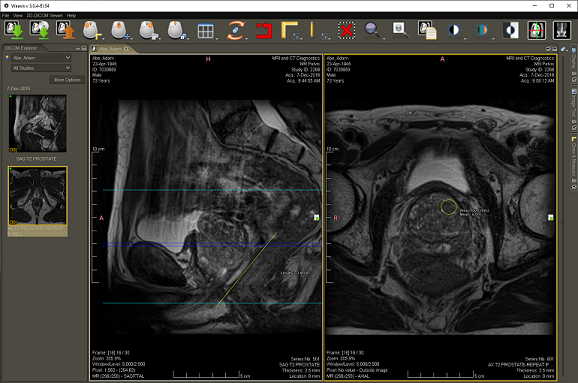
FusionVu enables quick import, alignment, and targeting of MRI-identified lesions. Its streamlined workflow reduces procedural complexity, allowing clinicians to focus on what matters most - accurate diagnosis and patient care.
With 70-micron resolution, ExactVu micro-ultrasound allows many MRI-identified lesions to be visualized directly in real time. This enables:
-
Highly precise, real-time targeting
-
Reduced dependence on software-based alignment
-
Greater confidence in lesion localization
Real-Time Tissue Characterization
FusionVu is enhanced by the PRI-MUS™ risk identification protocol, which helps clinicians differentiate and characterize prostate tissue in real time. This added layer of insight supports more informed clinical decision-making during the biopsy procedure.
Reducing the Limitations of Conventional Fusion
Standard elastic fusion workflows depend on aligning MRI with conventional ultrasound, where limited image clarity and patient positioning can impact accuracy. With sensors embedded directly in the probe for accurate tracking, FusionVu’s 3D elastic registration ensures precise alignment, enabling fast and reliable targeted biopsy guidance.
The Result: Confidence at Every Step
FusionVu delivers fast, simple, precise anatomical alignment, with suspicious targets documented directly within the workflow, empowering clinicians with real-time visualization, improved accuracy, and streamlined reporting.
 Physician Finder